

Creating A Unique Art Instruction Business
By Jim Tyler
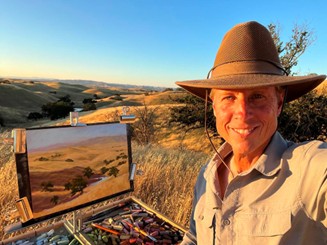
“Heck no!” That was my standard response for several years when people asked me to teach them pastels. Being a bit of an introvert, I couldn’t imagine getting any pleasure out of teaching. But I eventually submitted, and over the last 15 years I’ve realized how much I love teaching.
It’s a given that as an art instructor you have to have something to offer other artists. You have to have the confidence to demonstrate, and more importantly, articulate why and how you’re doing something, or else you shouldn’t be teaching.
In this blog, I want to write about some ways that I learned to approach my art instruction business that I have rarely seen in other workshops. This isn’t about technique, it’s about building a business model that’s rewarding both internally and financially.
If you’re an instructor, you may get a few ideas. And if you’re a student, you may get a few ideas to pass along to your favorite instructor.
YOUR SPECIALTY/NICHE
What will make your teaching unique? Here are some ideas that I’ve implemented.
Demonstrate iteratively. In most of my workshops I take an iterative approach to demonstrations. In beginner and intermediate classes, we’ll all paint the same scene at the same time. I’ll demonstrate one area, like the sky, while the class watches. Then the class paints the sky while I walk around and help. And we iterate like this to the end. This lets me control the pace of the class so that we’re all finished with the painting on time. No one flounders on their own, because they have just seen an example of how to do one small part. In advanced workshops, like plein air, we’ll paint different views but still stay in sync with iterative demos on value structures, etc.
Provide pastel Info. I have a huge document that I maintain with information on pastels. This evolved from all of the questions that I get asked as an instructor. Now it includes a roadmap to starting and building a pastel set, brands, history, paper, prepping, underpainting, framing, storing, cleaning, and handy tools. I add to this constantly and I email it for free to everyone before every class. I have supplemental guides on plein air, portraits, and underpaintings. It’s a great reference for the students and an easy talking point for me.
Keep classes small. My biggest pet peeve in the workshops that I’ve taken: large classes. It’s lucrative for the instructor but comes at the cost of individual attention to the student. Suppose there are 16 people in the class, and the instructor walks around giving each person a few minutes of feedback. That could be an hour between visits for each student, and in that time they’ve probably finished, tanked, or traveled too far down the wrong path. So my classes are small, and almost always with a waitlist, and therefore less profitable for me. The tradeoff is that the students get much more of my time, and individual attention is what really lets the student grow.
YOUR PIPELINE
An art instruction business should be treated like a classic pipeline business model. New students need to continue to flow into the pipeline (from word of mouth, advertising, shows). Existing students need to continue in the pipeline, improving their skills. The students that come out of the pipeline will be the friends that you paint with forever.
Remove barriers. Starting to paint with pastels is expensive. We’ve all seen artists come in with a cheap set of pastels they inherited from a great aunt, and some cheap pastel paper. This is like trying to start mountain biking with a 100 pound bike. It’s just gonna suck. So the answer is to remove the roadblocks to entry. Don’t have your own pastels? Borrow an extra set of mine. Didn’t show up with good sanded paper? Have a sheet of mine. Don’t have a plein air setup? Use my extra easel. I don’t consider these things an expense; they’re an investment. When a new artist gets hooked on pastels then they’ll continue taking lessons.
Let your students help drive your upcoming classes. I build some of my classes around student’s ideas, e.g., black paper nocturnes. When I start a big new thing, like a weeklong intensive retreat, I get together with a few selected students and have an advisory group brainstorming session. Lessons are always changing in terms of subject, duration, and difficulty, and studio/plein air. There is something for everyone in the pipeline.

Four scholarship artists painting in a Big Sur class
YOUR COMMUNITY
A good art instruction model builds a community of artists that paint together, even outside of lessons. It’s much more than a one time student/teacher transaction.
Scholarships. I offer one scholarship spot in all of my classes – it’s free to attend, including supplies and pastels. I have contacts in the local college and high school art departments and get recommendations on their best students. I cycle through these recommendations and I’m able to give these kids hands-on experience with pastel. Who knows, maybe some of them will pursue careers in art and their parents will curse me forever! When I teach a workshop at a ranch or other venue, the owner gets the scholarship spot. Last year I provided over 100 free hours of scholarship instruction!
Local art supply store. Our town has a great art supply store with a room for workshops. I’ve partnered with them for many years and it’s been a win-win situation. My students buy materials from them, and get a student discount. They worked with their suppliers to acquire four sets of Sennelier pastels for my scholarship spots. Great for me, great for the students, great publicity and sales for the art supply store.
THE INTANGIBLES THAT YOU GET IN RETURN
People point out that my approaches to teaching, such as small classes and scholarships, may not be the best business practice. I think that’s shortsighted. Over the long run, this approach gets a lot of new people excited about pastels by removing barriers to entry and providing scholarships. And it helps emerging artists develop more quickly with iterative demos and how-to guides. And it fills up my classes quickly. And you know what else? It has helped me to become a much better artist in a close knit community of fellow artists!