

What Abstraction Can Offer the Realistic Artist
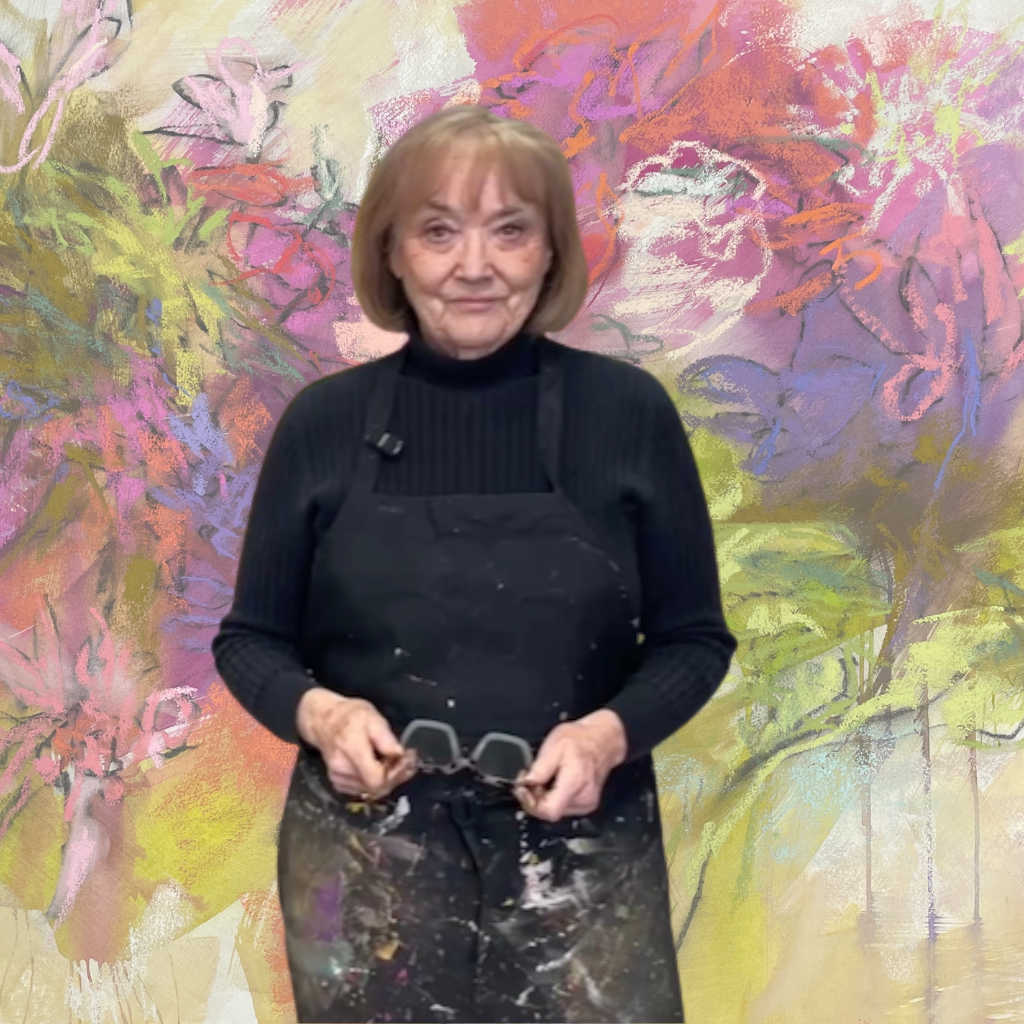
By Debora Stewart
For many artists, realism is where we begin. It’s where we learn to see accurately, to understand proportion, light, anatomy, and structure. I spent much of my youth working realistically, building those skills and trusting observation as my primary guide. That foundation has served me well throughout my career. And yet, at a certain point, it no longer felt like enough.
I remember feeling deeply stuck.
I wanted my work to say more—to feel more personal, more expressive, more connected to my inner experience. What I was seeing was accurate, but what I was feeling wasn’t fully finding its way onto the surface. That quiet frustration became the beginning of my journey into abstraction.
When Feeling Stuck Becomes an Invitation
Often, it’s discomfort that opens the door to change. My desire to move beyond realism wasn’t about rejecting it; it was about expanding it. I began experimenting without a clear destination in mind. I tried a variety of approaches, giving myself permission to explore rather than “solve” a painting.
One of the most important shifts I made was working from small fragments—cropped photos, bits of drawings, isolated details. Instead of thinking about the whole subject, I focused on finding abstract shapes, rhythms, and relationships. This allowed me to let go of expectations and work intuitively, responding to what was happening on the page or canvas.
The Influence of Gesture and the Figure
My background in figure drawing played a crucial role in this transition. I was especially drawn to active gesture drawing in life-drawing classes—the quick, energetic lines that capture movement and emotion rather than detail. Gesture taught me that expression could come from simplicity, speed, and responsiveness.
That understanding carried directly into abstraction. The body, even when no longer visible, informed the way I moved my hand, made marks, and built energy into a piece. Abstraction gave me a place where gesture could lead, without being tied to a literal form.
Emotion, Interpretation, and Synthesis
Another important influence came from my work with art-therapy approaches while working with youth. In those settings, art was often used as a way to explore emotions—sometimes complex or difficult ones—through color, shape, and symbolic interpretation rather than representation.
That experience stayed with me. Over time, my realistic training, gesture drawing, emotional interpretation, and intuitive exploration began to synthesize into something new. Abstraction became a language that could hold all of those influences at once.
I’ve now been on this journey for over thirty years, and it continues to evolve.
A New Way of Seeing and Experiencing
For realistic artists, learning about abstraction can be incredibly freeing. It offers a new way of seeing and experiencing the world—one that isn’t bound by conventions or expectations. Abstraction invites experimentation with unexpected color schemes, unconventional materials, expressive mark making, and layered processes.
Perhaps most importantly, it allows us to step out of our heads.
When we work abstractly, we are less concerned with “getting it right” and more attuned to what we are feeling, sensing, and responding to in the moment. The work becomes less about control and more about presence. In that space, more of ourselves naturally enters the work.
Expanding, Not Replacing, Your Practice
Exploring abstraction doesn’t mean giving up realism. Instead, it expands what’s possible. It deepens our visual language and strengthens our ability to express not just what we see, but how we experience being in the world.
Abstraction has taught me that there are many ways to see—and many ways to paint. For any artist feeling stuck, curious, or ready for a new direction, it can be a powerful and generous place to begin.